
Learning Skills Assessment
Interplay Learning Skills Assessments provide objective, data-driven evaluations of real-world technical skills across key competencies through 30–60 randomized questions completed in about 45 minutes, enabling employers to identify strengths, weaknesses, and training needs for their teams to improve hiring, promotion, and targeted development decisions.
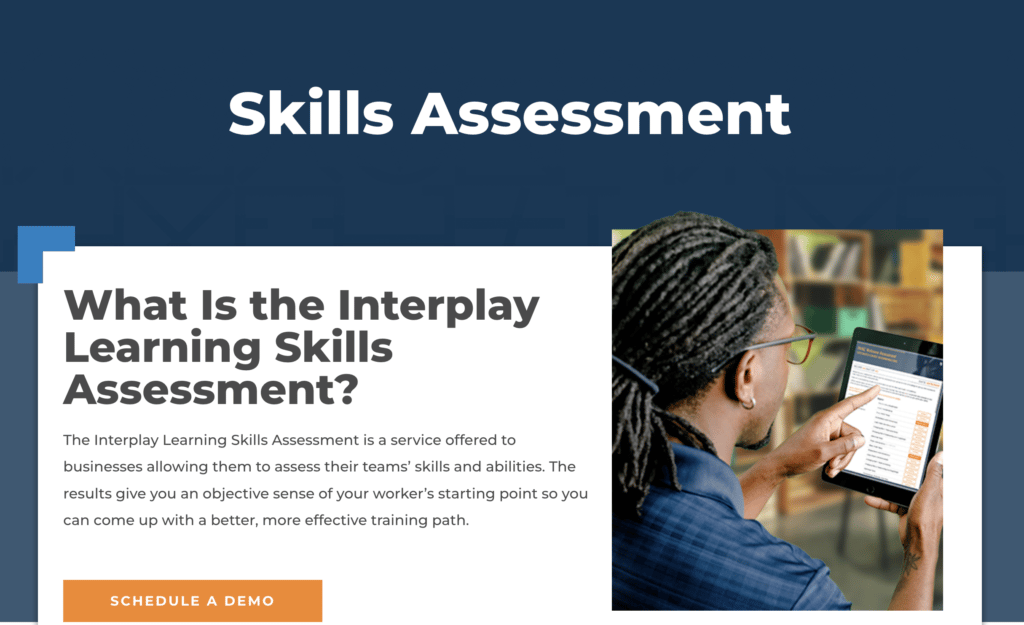
Skills Assessment

What are Interplay Learning Skills Assessments?
Interplay Learning Skills Assessments help you see exactly where your team stands. Each assessment measures real-world technical skills across key competencies, giving you an objective view of strengths, weaknesses, and readiness for training or promotion. With instant results and guided course recommendations, you can eliminate guesswork, target development where it matters most, and build a stronger, more capable workforce.

Does this sound familiar?
- Resumes and interviews don’t tell the full story.
- The same service issues keep popping up, no matter who you send.
- You don’t have an objective way to evaluate mid-level techs and tailor advanced training.
- You’re finding out about skills gaps only after callbacks or customer complaints.
With Interplay Learning’s Skills Assessments, you can finally see what’s real, not what’s assumed.
Our data-driven assessments give you an objective view of your team’s strengths and weaknesses so you can make smarter hiring, promotion, and training decisions. You’ll gain clarity on where each technician stands, what competencies they need to develop, and how much effort it will take to close those gaps.
Cut the Guesswork Out of Training
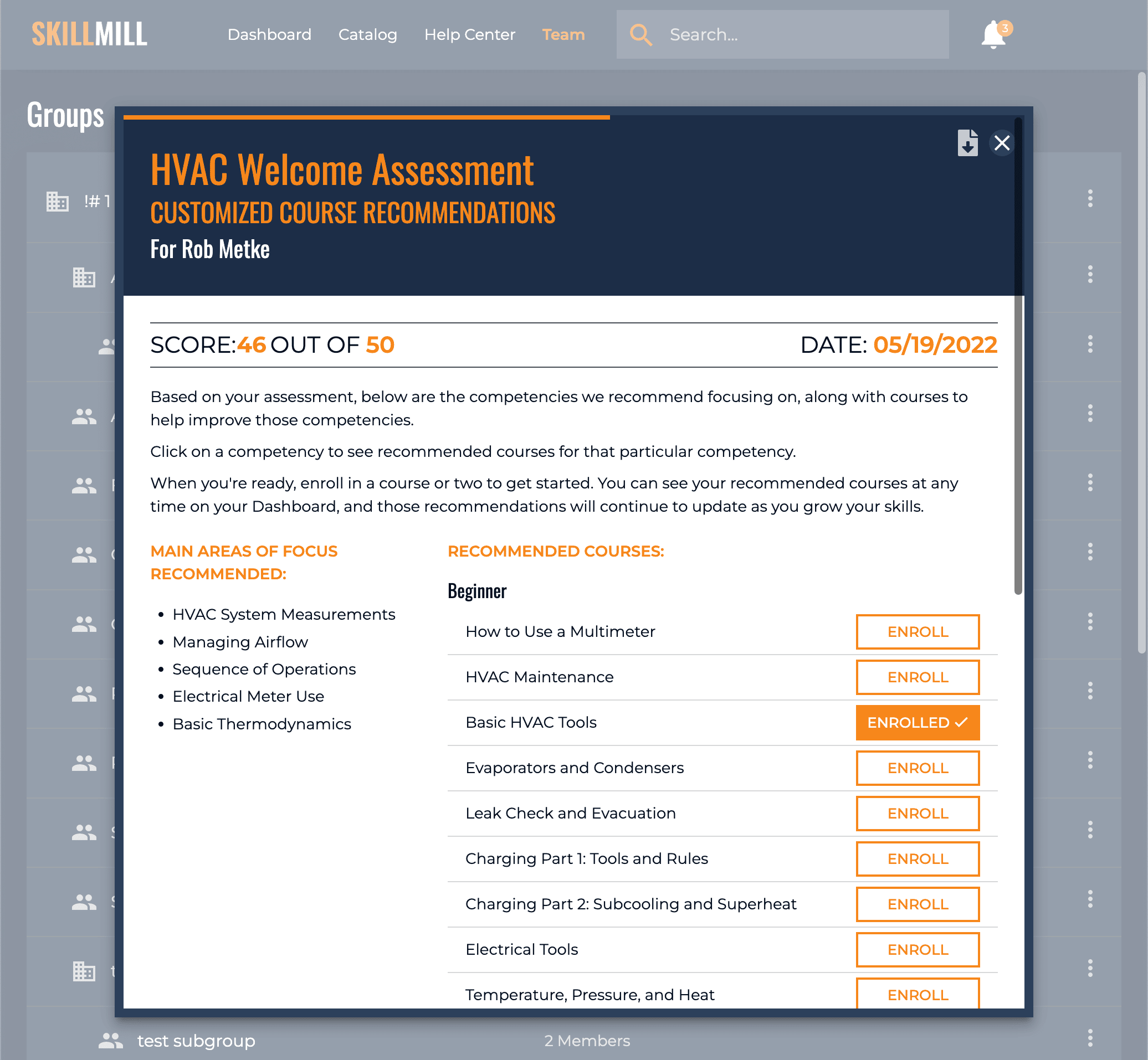
Each assessment includes 30–60 randomized questions that take about 45 minutes to complete and are aligned to key industry competencies. Once complete, admins and learners will both receive an instant report highlighting overall performance and specific skill gaps, plus guided training paths and course recommendations directly in our training platform.
Assessments are available for:
HVAC, Commercial HVAC, Multi-Family Maintenance, Electrical, Plumbing, Facilities Maintenance, Solar, and Industrial Maintenance.
HVAC Competencies
- 1.
Electrical Meter Use
- 2.
Converting Pressures to Temperatures
- 3.
Evaluating Refrigerant Charge
- 4.
Verifying Proper Airflow for AC
- 5.
Measuring Input
- 6.
Verifying Proper Airflow for Heat
- 7.
Vent Inspection and Verification
- 8.
Sequence of Operations
- 9.
Wiring Diagram Comprehension
- 10.
Combustion Efficiency and Safety
Commercial HVAC Competencies
- 1.Basic Electrical Safety
- 2.Basic Wiring Diagram Comprehension
- 3.Control Systems
- 4.Electrical Diagrams
- 5.Electronic HVAC System Components
- 6.General Safety
- 7.HVAC Motors
- 8.HVAC System Component Identification
- 9.HVAC System Measurements
- 10.Managing Airflow
- 11.Refrigerant Calculations
- 12.Refrigerant Handling
- 13.Residential HVAC System Installation
- 14.Residential Refrigerant System Components
- 15.Residential Refrigerant System Diagnosis
- 16.Sequence of Operations
- 17.Water Supply & Distribution Systems
Multi-Family Competencies
- 1.Electrical Meter Use
- 2.Measuring Input (Gas Appliances) (HVAC 1)
- 3.Verifying Proper Airflow (HVAC 2)
- 4.Evaluating Refrigerant Charge (HVAC 3)
- 5.Safe Electrical Work Practices (Electrical 1)
- 6.Wiring Fundamentals (Electrical 2)
- 7.Electrical Organization (Electrical 3)
- 8.Safe Practices in Plumbing (Plumbing 1)
- 9.Pipe Joining and Installation (Plumbing 2)
- 10.Fixture Installation (Plumbing 3)
Electrical Competencies
- 1.
General Safety
- 2.
Safety for Electricians
- 3.
Basic Electrical Safety
- 4.
Generic Hand Tools
- 5.
Basic Electrical Theory
- 6.
Service Entrance Equipment
- 7.
Electrical Diagrams
- 8.
Applying NEC
- 9.
Understanding Electrical Components and Fixtures
- 10.
Electrical Protection Devices
- 11.
Installing Raceways and Conduit
- 12.
Wiring Installation
- 13.
Electrical Fixture Installation and Maintenance
- 14.
Understanding Circuits
Plumbing Competencies
- 1.
General Safety
- 2.
Basic Electrical Safety
- 3.
Safe Practices in Plumbing
- 4.
General Hand Tools
- 5.
Plumbing Tools and Equipment
- 6.
Basic Math Skills
- 7.
Basic Measurements and Units
- 8.
Math for Plumbing
- 9.
Water Supply and Distribution Systems
- 10.
Understanding Plumbing Code
- 11.
Plumbing Fixtures
- 12.
Sanitary Drainage Systems
- 13.
Water Heaters
- 14.
Electrical Meter Use
Facilities Maintenance Competencies
- 1.Electrical Meter Use
- 2.Combustion Efficiency and Safety
- 3.Residential Heating Components
- 4.Managing Airflow
- 5.Ducting
- 6.Residential Refrigerant System Components
- 7.Refrigerant Calculations
- 8.General Safety
- 9.Basic Electrical Safety
- 10.Applying NEC
- 11.Wiring Installation
- 12.Electrical Protection Devices
- 13.Understanding Plumbing Code
- 14.Safe Practices in Plumbing
- 15.Water Supply and Distribution Systems
- 16.Sanitary Drainage Systems
- 17.Plumbing Fixtures
Solar Competencies
- 1.
Basic Electrical Theory
- 2.
Advanced Electrical Theory
- 3.
Applying the NEC
- 4.
Wiring Installation
- 5.
Solar Array Assembly (Residential)
- 6.
Electrical Commissioning
- 7.
Service Entrance Equipment
- 8.
Electrical Protection Devices
- 9.
Electrical Components and Fixtures
- 10.
Electrical Tool Usage
- 11.
Solar System Components & Operation
- 12.
Service Entrance Equipment
- 13.
Mount Modules
- 14.
Electrical Meter Use
- 15.
Mechanical Commissioning
- 16.
Site Assessment
- 17.
Solar Cell Technologies
- 18.
Electrical Fixture Installation and Maintenance
- 19.
DC-AC Inverter Technologies
- 20.
Solar Module Design
- 21.
Troubleshooting Electrical System
- 22.
Current-Voltage (I-V) & Power Curves
Industrial Maintenance Competencies
- 1.
Workplace Safety
- 2.
Mechanical Systems
- 3.
Hydraulic Systems
- 4.
Pneumatic Systems
- 5.
Electrical Systems
- 6.
Electronic and Process Control Systems
- 7.
Robotics and Automation
- 8.
Welding
- 9.
Piping Systems
Why It Matters:
By understanding where your workforce stands, you can:
- Build a skills inventory across your team and identify training priorities.
- Improve hiring and promotion decisions with objective data.
- Boost productivity by focusing training where it’s needed most.
- Increase your bottom line through faster ramp-up, fewer callbacks, and better customer outcomes.
Stop relying on assumptions. Start developing a workforce built on verified skills.
Sample Report
Text
Bigger text
Line height
Text align
Readable font
Visual
Contrast
Grayscale
Hide images
Pause animations
Orientation
Screen reader
Highlight links
Reading mask
Outline focus
Sitemap
Page structure
Qualified