
Understanding Arc Flash Safety From Experience
In a personal account from December 1996, electrical expert Chad Soucy recounts being sent to replace expensive circuit breakers in a poorly lit warehouse lighting panelboard despite discovering blown fuses indicating a different issue, and facing pressure from his supervisor to proceed dishonestly, an experience that profoundly shaped his lifelong commitment to electrical safety and ethical work practices.
The Arc Flash Event that Led to a Safety Mindset [A Cautionary Tale]
-
December 7, 2021
-
 by
Chad Soucy
by
Chad Soucy
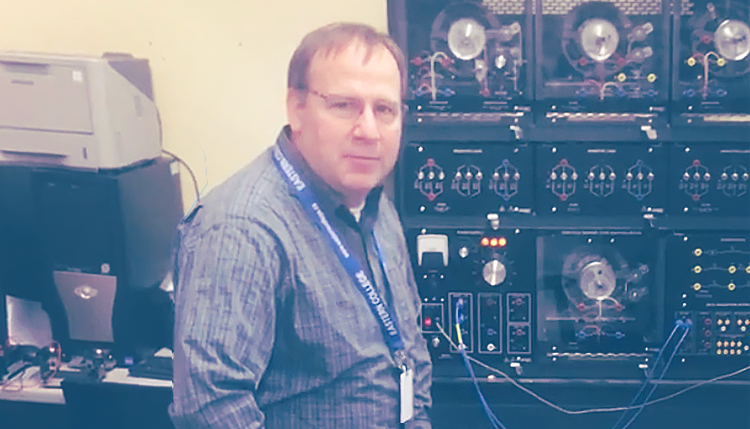
Chad Soucy serves as the Electrical SME for Interplay Learning and is dedicated to practicing adult learning theories combined with NFPA 70(E), NEC and trade practices. Chad is a life-long learner and is steadfastly committed to electrical safety.
The following is his personal story that led to a safety mindset.
The Call
On Dec 15, 1996, I was dispatched to follow up on a service call that changed my life forever.
A fellow employee from my company had already determined the problem and solution, which entailed installing circuit breakers that he thought were bad.
The job site was a local warehouse. When I arrived, the area was poorly lit, which made sense to me as this call was about replacing circuit breakers in a lighting panelboard.
I went to the panelboard and quickly noticed that every third circuit breaker was marked “NFG.” In short, a 3 phase panel board means there is a blown fuse in the distribution panelboard feeding the lighting panelboard.
I called the office and told my supervisor what I found, and he told me to proceed with changing the circuit breakers anyway; they were very expensive, special ordered, and couldn’t be sent back.
When I told him I couldn’t do that because it was dishonest, he said something to me that I took to mean that my job would be threatened/terminated if I didn’t change out the circuit breakers.
At a Cross-Roads
From there, I was left in a bad place; I knew I shouldn’t change the circuit breakers, but I also didn’t want to get fired. Today, in safety terms this is known as a ‘poisoned work environment’.
I went into the main electrical room to find the distribution panelboard, and I opened the dead front switch door, bypassing the safety; I wanted to inspect the fuse holder and test the fuses.
There were three 600 volt-HRC (high rupture capacity) fuses and the C phase was blown as expected, from seeing the “NFG” markings on the circuit breakers. Due to this finding, I planned to schedule a time with the shift manager to shut down later in the evening and change the blown fuse.
The bottom line was that I wasn’t going to change the circuit breakers.
The Error
During the inspection, I inserted my screwdriver and shorted phase C to the frame of the distribution cabinet, creating an arc flash. A fireball washed over me, partly redirected by the door, scorching the floor, wall, and a table.
I received deep second-degree burns on my hands, arms and face; I couldn’t see or hear, I was disoriented. If that wasn’t bad enough, the skin on my hands was peeling off.
Thankfully, my apprentice was at a safe distance, and he had the presence of mind to get me to the hospital, where I was rushed to the burn unit.
My actions shut the warehouse and neighboring paper mill down (known as an unscheduled shutdown) because I was working on a distribution panelboard live and without a safety mindset.
I put myself and others at risk that day in a totally preventable accident.
A Time for Reflection
Back then, there was a saying that went:
“An arc flash event with a fused circuit is a trip to the burn unit, and a circuit breaker arc flash event is a trip to the morgue.”
I was lucky to be alive and made a full recovery, spending only three days in the burn unit.
Sadly, it took such an experience for me to realize that I wasn’t working safely.
I assumed all the blame for the event. Most of my colleagues distanced themselves from me, and I was pushed out from working on local jobs.
For the next year, I felt many different emotions— mostly isolated and alone. Looking back, I now realize that I was experiencing trauma I didn’t even know I had.
It would be easy for me to blame the accident on a lack of safety protocol or that I acted out of fear of my job being threatened… but I didn’t think that way at all.
Correcting Course
I took ownership of the event and decided to carry on with my career, focusing on leading with a safety mindset. I worked hard to build my career alongside learning the electrical fundamentals necessary to understand electrical hazards and how to reduce the risk of electric shock and arc flash.
My involvement with Interplay as a Safety and Electrical Subject Matter Expert means I can now help educate an expanding audience of learners virtually.
Not only am I contributing to enhancing safety know-how within the Interplay Learning catalog, but through digital simulations, I can archive my knowledge, reaching an unlimited number of learners, who I hope will carry on with the same safety mindset.
My accident has led me to stand up for safety above all, and by sharing my mindset, I am helping make the trades a lot safer. A safe workplace is not just for you or me, but for our families and all the dedicated people we work with and educate.
If you want to read more on safety from Chad, check out his interview on The importance of Building Up Technician Confidence.
Chad Soucy
Interplay Learning Electrical Expert
Chad is Interplay’s electrical expert and is a Master Electrician. Chad has progressed as an electrical professional throughout his career, with early beginnings in rewiring/wiring homes to QA/Commissioning plants, honing his skills in all aspects of the electrical trade along the way. He transitioned his career through Residential, Commercial and Industrial sites, and in 2012, further expanded on his mission to lifelong learning in becoming an electrical instructor. He continued on this path as an online course developer and is steadfastly committed to electrical safety and sound adult learning theories.
Latest

Boosting Your Bottom Line: How to Maximize Training ROI

Why Gen Z Learners Need a Different Approach to Trades Education

5 Ways to Navigate the Teacher Shortage with Technology

6 Building Blocks Your Trades Program Needs to Win Funding, Improve Delivery, and Increase Access
Text
Bigger text
Line height
Text align
Readable font
Visual
Contrast
Grayscale
Hide images
Pause animations
Orientation
Screen reader
Highlight links
Reading mask
Outline focus
Sitemap
Page structure
Qualified