
What Netflix’s Hard Cell Got Right: Why Preventative Maintenance Work Is Vital For Government Facilities
The Netflix series "Hard Cell" humorously portrays the critical challenges faced by prison facilities management, emphasizing how deprioritizing preventative maintenance—such as plumbing repairs—due to budget reallocations can lead to severe infrastructure failures and operational crises in government facilities.
What Netflix’s Hard Cell Got Right: Why Preventative Maintenance Work Is Vital For Government Facilities
-
June 13, 2022
-
 by
Interplay Learning
by
Interplay Learning
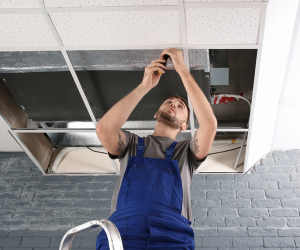
In the new Netflix series “Hard Cell,” we get a tongue-in-cheek glimpse into what daily life looks like for prison administrators and facilities maintenance staff. Catherine Tate headlines as Laura, the governor of HMP Woldsley prison, a fictional federal-level correctional facility in the UK for convicted female offenders.
Although the Netflix series is lighthearted and pokes fun at prison administration and bureaucracy, it does highlight some of the most pressing challenges that corrections administrators face in navigating facilities management within the corrections system – particularly aging infrastructure, reduced budgets, and staffing challenges.
When preventative and corrective repairs are deprioritized, you-know-what hits the fan
At the beginning of the Hard Cell series, the prison’s dilapidated plumbing system suffers a total failure creating sewage spills and contaminating the facility’s freshwater.
Laura, the prison’s governor, comments that while they had set aside budget for the repair work to fix the failing system, she had diverted the funds to a pet project geared towards lifting the inmates’ morale: a prison theater production of West Side Story.
Laura’s assistant governor, Dean, describes the sewage crisis unfolding in its sheer misery: “So far, 300 women haven’t showered, cleaned their teeth, or flushed a toilet for forty-eight hours.”
While the particular scenario of a Hard Cell-style total plumbing failure may be far-fetched, there is an element of realism: preventative maintenance and corrective repairs are often pushed further and further down the to-do list, especially for what tend to be the highest cost centers: plumbing systems, roof repairs, and perimeter detection.
It’s no surprise that corrections administrators are forced to choose where to assign limited budget amidst surging costs across the board.
This is especially true for local corrections facilities that face additional budget strain as aging facilities require additional maintenance and repairs. In fact, “Jail and other local corrections costs have risen sixfold since 1977, with jail costs reaching $25 billion.”
These rising costs are not likely to slow down soon with ” roughly a third of jail facility capacity was more than 30 years old, and about 20% of jails were overcrowded, which could present significant capital challenges to local budgets.”
Labor shortages and staffing add burden to an already-strained system
And to make matters worse are the ever-present staffing shortages facing the corrections industry.
In Wisconsin, nearly a quarter of jobs sit vacant, with some areas experiencing extreme staffing shortages leaving up to fifty percent of jobs unfilled.
There are also the issues of morale and retention – filling corrections facilities jobs is one piece of the labor shortage puzzle, and retaining those employees is another, perhaps even more important aspect to consider.
Investing in regular preventative maintenance changes the math
It’s clear that the stress of stretched budgets and hiring challenges aren’t going anywhere – so what can corrections administrators do to reduce the strain on their facilities in both the near and longer terms?
The first thing is to ensure that preventative maintenance and corrective repair projects aren’t deferred.
Investing in preventative maintenance is reported to save “more than $13 per square foot in maintenance costs over a 10-year period.”
That saving is amplified over the long run as the amount saved by investing in preventative maintenance shoots up to “$25 per square foot over 20 years. On average, a 100,000-square-foot jail or prison can save $2.5 million per year over 20 years by spending $2.84 per square foot per year ($284,000) for maintenance.”
Secondly, administrators should look for ways to help their existing staff enhance and expand their skillsets for maintenance and repairs. Doing so can help reduce the cost and time required to bring in external contractors for basic work orders that internal staff could otherwise complete.
One way to skill up existing staff and new hires is to implement a training platform that will allow your team to improve their knowledge and skills while providing a smart, cost-effective way to improve your facility’s maintenance program for preventative maintenance as corrective repair.
Additionally, providing training to corrections facilities personnel is an investment in their professional development – a critical consideration as today’s workforce wants to learn, progress, and build new skills. In fact, “ 76% of employees say that a company would be more appealing if it offered additional skills training to its staff.”
In a competitive hiring market like our current market, where job applicants are looking for ways to squeeze out as much value as possible from a new job, additional perceived value can come in the form of the opportunity to develop new skills and benefit from on-the-job experience with essential maintenance functions like HVAC, plumbing, and electrical work.
Maintenance and facilities training improves the bottom line of your operating budget by reducing external vendor costs and improves your facilities staff members’ skills, leading to better preventative maintenance, which enhances the longevity of critical systems like roofing, HVAC, and plumbing. Plus, employee satisfaction rises with employer investment into training and skill development. It’s a win-win for your facility and your staff.
Maybe if HMP Woldsley’s governor Laura had invested in plumbing maintenance training, she wouldn’t have found herself up the creek without a paddle!
Get started with training for your staff
Ready to get the ball rolling on implementing a training program for your facilities staff? Get in touch for a complimentary consult and demo of our facilities maintenance training platform.
Latest

Boosting Your Bottom Line: How to Maximize Training ROI

Why Gen Z Learners Need a Different Approach to Trades Education

5 Ways to Navigate the Teacher Shortage with Technology
6 Building Blocks Your Trades Program Needs to Win Funding, Improve Delivery, and Increase Access
Text
Bigger text
Line height
Text align
Readable font
Visual
Contrast
Grayscale
Hide images
Pause animations
Orientation
Screen reader
Highlight links
Reading mask
Outline focus
Sitemap
Page structure
We use cookies
We use cookies to improve your experience on this website. You may choose which types of cookies to allow and change your preferences at any time. Disabling cookies may impact your experience on this website. You can learn more by viewing our Cookie Policy.
Do Not Sell or Share My Personal Information

Qualified