
Steps to Becoming an Electrician
The article outlines the step-by-step process to become an electrician, starting with minimal prerequisites like a high school diploma or GED and passing an entrance aptitude test (such as the IBEW Aptitude Test), emphasizing essential skills including math, reading, safety, and problem-solving, and explaining that most electricians begin with apprenticeships leading to various career advancement opportunities in residential, commercial, industrial, and construction electrical work.
How to Become an Electrician? A Step by Step Guide For Beginners
-
February 2, 2021
-
 by
Chad Soucy
by
Chad Soucy
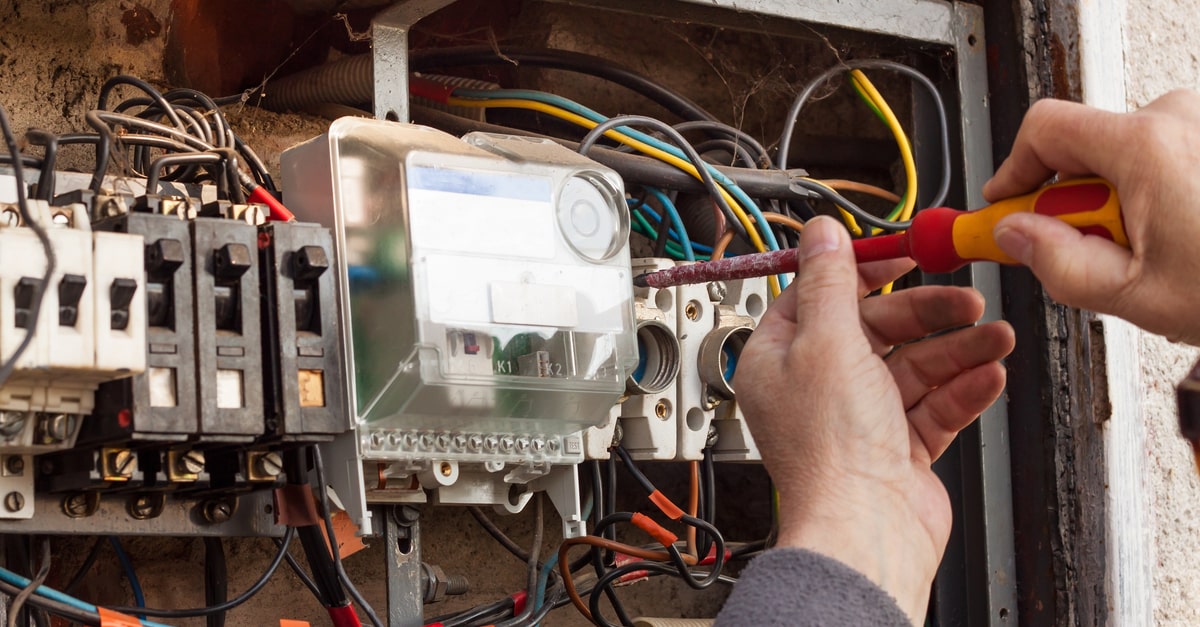
Becoming an electrician can give tradespeople opportunities in a wide range of areas including: residential, commercial, industrial, construction and more. Most hopeful electricians start with an apprenticeship and upon completing the program, can go on to become project supervisors, project managers, estimators, planners, instructors and even self-employed electrical contractors.
Read on to learn how to become an electrician.
Prerequisites
The prerequisites are minimal to start the journey to becoming an electrician. You’ll need either a high school diploma, or a GED, and a passing score on an entrance evaluation. Some of the skills needed are:
- Basic math
- Competent reading
- Customer service
- Safety knowledge
- Ability to do hard labor
- Problem-solving
- Good communication
- Attention to detail
Entrance Evaluation
The entrance evaluation is essentially an aptitude test that helps determine someone’s suitability for the trade or specific roles within the trade. The most common is the IBEW Aptitude Test.
The test is 2.5 hours, contains reading and math, and has a mechanical portion. One of the most common issues from those taking the test is that they weren’t prepared for the algebra in the math portion. That’s why it’s important not only to study basic math, but also understand how it applies in the field such as, how pulleys work and how loads are best distributed.
Test takers who do not pass will be ineligible from trying again for 6 months.
Criminal Background
All states have different policies when it comes to criminal backgrounds. Your eligibility to obtain a Journeyman certification is dependent on the severity of the crimes and the timeframe that the crimes were committed.
It is very important to note that there is NO Federal law that prevents an electrician with a criminal record, even felonies, from becoming certified within their state. Furthermore, the IBEW (Electrician’s Union), does not have any policies preventing membership because of a criminal record either.
This makes a career as an electrician attractive to people trying to create a new and better life, and to those who are willing to work hard for it.
Vocational Training
To become an electrician, you must start with a training program such as: a state-certified vocational school, technical training school or earning an undergraduate degree. These programs range from 10 months to 4 years.
Though the path is different for everyone, securing an apprenticeship allows students to get field experience while learning in the classroom, better preparing them for real-world scenarios.
Apprenticeship Program
Apprenticeship programs vary from state to state and are designed to provide apprentices with the high-quality training necessary to facilitate their careers in the electrician trade. Instruction provided by industry experts ensures a balance between classroom theory and shop application. Students can then apply these skills in a work-like setting.
Apprenticeship Contract
Electrical apprentices must agree to a three-way contract between the employer, the government and the apprentice. This agreement is a legally binding document that says the apprentice will complete the program as stated, and in return, the employer will train and pay them.
The general license is completed after 8,000 documented hours of on-the-job training that was evaluated by a Journeyperson or mentor.
Apprentice to Journeyperson
While on the path to becoming a Journeyperson, apprentices develop skills with hand tools and power tools, fundamental wiring practices, conduit bending, service entrances and troubleshooting. They also learn how to apply the National Electrical Code.
Journeyman Certification
In the United States, there is no federal electrician certification that is accepted universally among the 50 states. Each state has a different certification process with different prerequisites.
The most common among all certifications is a Journeyman certification. Although all 50 states have their own Journeyman certification test and policies. There are many states that will reciprocate Journeyman status, or at the least, deem a Journeyman of another state eligible to sit for their Journeyman test.
Eligibility
Almost all states share a few common prerequisites to be eligible to take the Journeyman test.
- Must have completed a state-recognized formal electrician training program, whether union or non-union
- Must have accumulated a minimum of 8,000 work hours or 4 years’ worth of hands-on experience
After you send in your complete application, required supplementary proof of hours worked, required fees, and the testing body deems you eligible to take the test, you will be given a test date.
Most Journeyman tests are very similar including a written portion asking 100-120 multiple-choice questions. It is an open-book test and can be answered with the use of the N.E.C codebook. For residential, low-voltage or fire alarm certifications, there will be significantly fewer questions and they will pertain mainly to that specific subject area.
One major difference is whether they require a hands-on practical evaluation. California, for example, does not have any hands-on portion in their Journeyman test while Texas does.
Journeyman Certification Renewals
Journeyman certifications are not everlasting and must be renewed similar to a driver’s license. The states each have different policies regarding the renewal of Journeyman licenses, but they all share the common requirement of a minimum amount of continuing education completed. For example, in California, you must renew your Journeyman card every 3 years and take a minimum of 32 hours of continuing education from a state-approved organization.
Whether you decide to get a Bachelor’s degree, go to trade school or begin working as an apprentice, continued training is crucial to remaining up-to-speed on advancements in the electrical field. Rather than bulking your schedule with in-person courses, consider online options like Interplay Learning’s Interplay Learning, where you can learn from experts from the comfort of your own home.
Chad Soucy
Interplay Learning Electrical Expert
Chad is Interplay’s electrical expert and is a Master Electrician. Chad has progressed as an electrical professional throughout his career, with early beginnings in rewiring/wiring homes to QA/Commissioning plants, honing his skills in all aspects of the electrical trade along the way. He transitioned his career through Residential, Commercial and Industrial sites, and in 2012, further expanded on his mission to lifelong learning in becoming an electrical instructor. He continued on this path as an online course developer and is steadfastly committed to electrical safety and sound adult learning theories.
Latest

Boosting Your Bottom Line: How to Maximize Training ROI

Why Gen Z Learners Need a Different Approach to Trades Education

5 Ways to Navigate the Teacher Shortage with Technology

6 Building Blocks Your Trades Program Needs to Win Funding, Improve Delivery, and Increase Access
Qualified